Key takeaways
- Vitamin K is a family: K1 (phylloquinone, leafy greens, mainly clotting) and K2 (menaquinones MK-4 to MK-13, fermented and animal foods, plus gut bacteria) [VD09].
- Adults need 120 mcg (men) / 90 mcg (women) of total vitamin K daily by Adequate Intake; most people reach it from food [VD09].
- The mechanism story — D brings calcium in, K-dependent proteins handle it in bone and vessel walls — is genuinely how the proteins work [VD09].
- The outcome evidence is observational: Rotterdam's top K2-intake third had a coronary-death relative risk of 0.43 versus the bottom third; K1 showed no such link [VD10].
- No trial has shown K2 supplements preventing cardiovascular events; and anticoagulant users must keep vitamin K intake consistent — clinician first, always [VD09][VD10].
Meet the K family
Vitamin K is not one compound. It is a family sharing a chemical backbone, and the NIH's fact sheet divides it into phylloquinone — vitamin K1 — and the menaquinones, vitamin K2, designated MK-4 through MK-13 by the length of their side chains [VD09].
K1 is the plant form: green leafy vegetables are full of it, it is the main dietary form, and its best-known job is blood clotting — prothrombin, the protein at the center of coagulation, is vitamin K-dependent [VD09]. K2 forms are mostly of bacterial origin: they appear in fermented foods and modest amounts in meat, dairy, and eggs, and gut bacteria produce long-chain menaquinones as well. Natto, the Japanese fermented soybean food, is the extreme case — about 850 mcg of MK-7 in a 3-ounce serving. MK-4 is the odd one out: your body makes it from K1 [VD09].
Total vitamin K has an Adequate Intake — 120 mcg a day for men, 90 for women — and survey data says most people in the US consume adequate amounts from diet [VD09]. There is no established upper limit for vitamin K; it has low toxicity potential [VD09]. The complications with K are not about dose. They are about one specific drug interaction, covered below, and about evidence quality, covered next.
The mechanism: why D and K get paired
Vitamin K's core biochemistry is activation: it is the coenzyme for an enzyme that carboxylates — switches on — vitamin K-dependent proteins [VD09]. Two of those proteins carry the entire D-plus-K2 story:
-
Osteocalcin, present in bone, involved in bone mineralization and turnover [VD09].
-
Matrix Gla protein (MGP), present in vascular smooth muscle, bone, and cartilage, and "the focus of considerable scientific research because it might help reduce abnormal calcification" [VD09]. Note the NIH's own wording: might.
Vitamin D, meanwhile, raises calcium absorption from food — that is its central, undisputed job [VD01]. Put the two together and the pairing narrative writes itself: D brings the calcium in; K-activated proteins are part of how the body handles calcium in bone and vessel walls. As a mechanism, that is accurate. The error to avoid is the leap from "these proteins need K to activate" to "a K2 capsule will route your calcium correctly and protect your arteries." Mechanism is not outcome. Outcomes need trials, and the trials are where this story gets honest.
The evidence: one famous cohort, no verdicts
The human data everyone cites is the Rotterdam Study. Geleijnse and colleagues followed 4,807 Dutch adults with no history of heart attack, grouped by dietary menaquinone intake, for roughly a decade [VD10]. The top third of K2 intake, versus the bottom third, had:
- a relative risk of coronary heart disease death of 0.43 (95% CI 0.24–0.77),
- a relative risk of all-cause mortality of 0.74 (0.59–0.92),
- and lower odds of severe aortic calcification (OR 0.48, 0.32–0.71) [VD10].
K1 intake, notably, was related to none of the outcomes [VD10]. Those are big, eye-catching numbers. They are also observational numbers: people who ate more K2-rich food (in the Netherlands, substantially cheese) differ from people who ate less in a hundred ways a statistical adjustment only partly captures. The authors' own conclusion was measured — adequate menaquinone intake "could be important" for prevention [VD10]. Twenty years on, randomized trials of K2 supplements have studied arterial stiffness and calcification markers with mixed results, and none has yet demonstrated fewer heart attacks or deaths. The mechanism remains plausible; the proof remains pending.
So where does that leave the pairing? Eating K-rich food is unambiguously good practice. Supplementing K2 alongside D is a bet on a mechanism plus one strong cohort — a bet many reasonable people take, at food-level doses, with clear eyes. What it is not is established prevention, and any product that sells it as such is ahead of the evidence by about one clinical trial era.
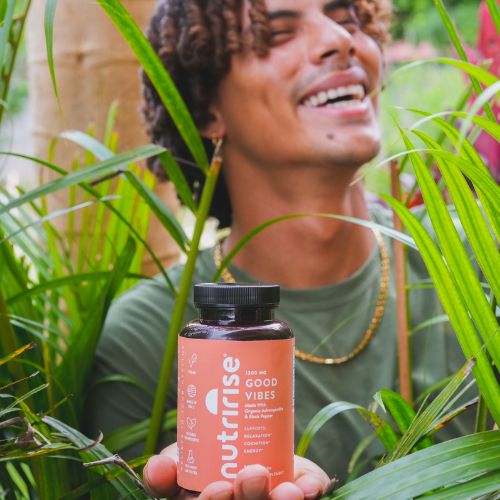
One disclosure, because this library holds itself to it: NutriRise sells a vitamin D3 + K2 combination. Its main store listing is not live as of this writing, which is why this article carries no purchase link for it — and the article would read exactly the same if it were live. The evidence is the evidence.
The warfarin rule
This is the section that outranks everything above. Warfarin and several other anticoagulants work by antagonizing vitamin K — that is literally their mechanism — and people taking them need to maintain consistent vitamin K intakes, because swinging your K intake swings the drug's effect [VD09]. Starting, stopping, or changing any vitamin K supplement — including a D3+K2 combination — while on an anticoagulant is a decision for the clinician managing your medication, full stop. The same caution applies to anyone with a bleeding disorder or a clinician-managed clotting condition. No article, including this one, outranks that conversation.
Frequently asked questions
They differ mainly in how long they persist: one comparison found both phytonadione and MK-7 well absorbed, with MK-7 having a longer half-life [VD09]. Outcome trials have not crowned a winner, so form choice is a secondary detail. Dose consistency and the warfarin rule matter more than the MK number.
Can I get enough K2 from food?
Many people cover their total vitamin K from food — greens carry K1, and cheese, egg yolk, and fermented foods carry menaquinones; gut bacteria contribute an amount researchers describe as satisfying at least some of the requirement [VD09]. Whether your K2 specifically is "enough" has no established target to measure against — there is no separate K2 requirement, only the total-K Adequate Intake [VD09].
Does K2 pull calcium out of arteries?
That is the marketing version of the MGP mechanism, and it overstates it. MGP is a vitamin K-dependent protein in vessel walls that researchers study for a possible role in reducing abnormal calcification [VD09]. A possible role in a protein's activation is not a demonstrated removal of arterial calcium in people, and no trial has shown that outcome.
Do I have to take K2 with my vitamin D?
No requirement exists. Vitamin D performs its established jobs — calcium absorption, bone maintenance — without a K2 co-supplement, and the pairing's added benefit is unproven rather than established [VD09][VD10]. If you take both, take them as an informed preference, not an obligation.
I take a blood thinner. Is a D3+K2 product safe for me?
That question belongs to your clinician before any purchase. Anticoagulants like warfarin work against vitamin K, and consistency of intake is the management rule [VD09]. Bring the product label to the appointment — and do not start or stop K in the meantime.
Next step
If you have not yet read the piece this whole library's safety rules live in, it is the natural finish: Vitamin D Safety: Upper Limits, Testing, and Talking to a Clinician. And the format question — softgel or drops — is answered in Softgels vs Drops: How to Take Vitamin D.
References
[VD01] NIH Office of Dietary Supplements. Vitamin D — Health Professional Fact Sheet. Calcium absorption as vitamin D's central role; intakes and upper limits. https://ods.od.nih.gov/factsheets/VitaminD-HealthProfessional/
[VD09] NIH Office of Dietary Supplements. Vitamin K — Health Professional Fact Sheet. K1/K2 forms and sources, carboxylation and vitamin K-dependent proteins (prothrombin, osteocalcin, matrix Gla protein), Adequate Intakes (120/90 mcg), no UL set, and the anticoagulant consistency rule. https://ods.od.nih.gov/factsheets/VitaminK-HealthProfessional/
[VD10] Geleijnse JM et al. Dietary intake of menaquinone is associated with a reduced risk of coronary heart disease: the Rotterdam Study. J Nutr 2004;134(11):3100–3105. PMID 15514282. 4,807 adults; top vs bottom menaquinone tertile: CHD death RR 0.43 (0.24–0.77), all-cause mortality RR 0.74, severe aortic calcification OR 0.48; phylloquinone unrelated. Observational. https://pubmed.ncbi.nlm.nih.gov/15514282/
• Recommended Products:
.









 Cart (


