How Saffron Works: Crocin, Safranal and the Serotonin Story

Quick answer

Saffron's mood story rests on three named compounds — crocin, converted in the body to crocetin, safranal, and picrocrocin — and on a set of proposed mechanisms that are, at this point, mostly preclinical: in animal and cell studies, saffron's constituents appear to influence serotonin signalling (including moderating serotonin reuptake), dampen oxidative stress and inflammation in brain tissue, and interact with stress-hormone pathways. The human trials show mood effects [SF01][SF02]; they do not show which mechanism produced them, because nobody has yet run the human study that isolates one. So the honest sentence is: saffron has credible human outcome data and plausible, unproven-in-humans mechanisms — the reverse of most supplements, which have beautiful mechanisms and no outcomes. One phrase you will never read from us: "nature's SSRI." SSRIs are specific drugs with known dosing, known effects and known risks; a flower extract with partially mapped pathways is not one, and pretending otherwise is how supplement marketing earns its reputation. As ever in this library: if low mood persists, impairs your life, or includes thoughts of harming yourself, the mechanism that matters is professional help — promptly (US: 988).

Key takeaways

  • The cast: crocin (pigment → crocetin after digestion), safranal (aroma), picrocrocin (bitter precursor of safranal). Standardized extracts declare amounts of this family (affron® standardizes to Lepticrosalides ≥3.5%); unstandardized labels — including ours [SF-L01] — do not, which is why mechanism talk can never rescue a vague label.
  • Serotonin: preclinical work suggests saffron constituents moderate serotonin reuptake and receptor activity — suggests, in animals and cells. This is also exactly why combining saffron with serotonergic medication is a clinician conversation.
  • Antioxidant/anti-inflammatory actions in brain tissue are the best-replicated laboratory findings — and the least specific: many things are antioxidants in a dish.
  • Stress-axis (HPA/cortisol) effects appear in animal models; human cortisol data for saffron is thin. The stress claims in this library lean on Kell's human symptom scores [SF02], not on hormone promises.
  • Mechanism quality check for any supplement: ask which tier the evidence sits on — human outcome, human biomarker, animal, or test tube — and refuse to let a lower tier borrow a higher tier's confidence.

Meet the compounds

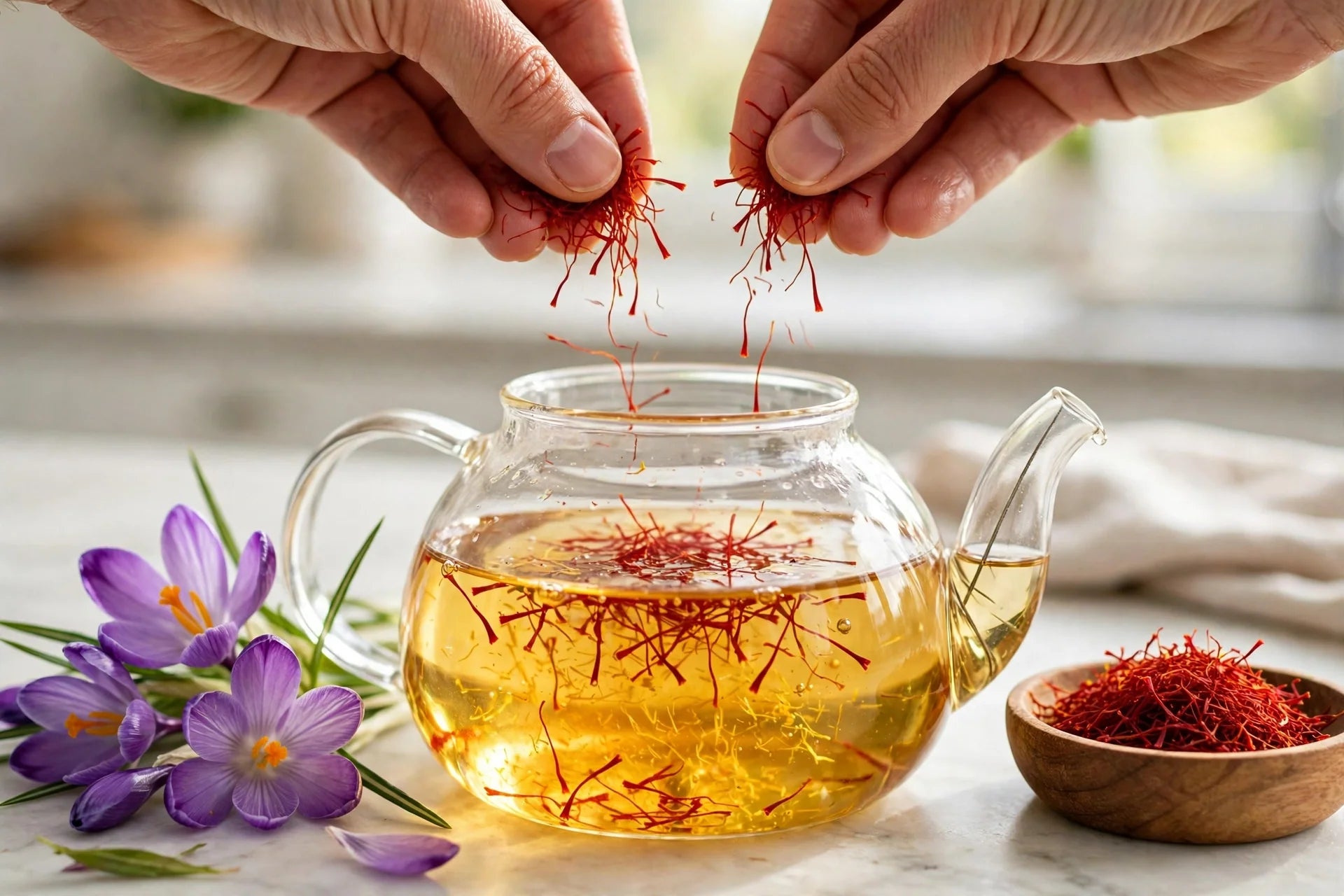
A saffron stigma is a tiny chemical factory. Crocin is its headline pigment — a water-soluble carotenoid, rare in the plant world — and after you swallow it, digestive enzymes clip it into crocetin, the form that actually circulates and can cross into the brain. Safranal is the volatile oil behind saffron's unmistakable smell, formed from picrocrocin, the bitter glycoside that gives the spice its taste edge. When researchers standardize an extract, this family is what they standardize to: affron®, the extract in the healthy-adult trial [SF02], is standardized to Lepticrosalides — a measured bundle of crocins and safranal — at not less than 3.5%. Hold that against our own label: 88.5 mg of extract, no standardization declared [SF-L01]. The compounds are presumably in there — it is a genuine saffron extract — but "presumably" is doing real work in that sentence, and mechanism-based confidence scales with declared content. This is the practical reason standardization matters, stated without any salesmanship in either direction.

The serotonin chapter — labelled preclinical

The most repeated mechanism claim is that saffron "works on serotonin." Here is what that actually rests on. In animal studies, saffron extracts and isolated crocin/safranal produce antidepressant-like behaviour in standard rodent tests (forced swim, tail suspension), and those effects can be blocked or modified by drugs that interfere with serotonin signalling — evidence the pathway is involved, in rodents. Biochemical work suggests constituents may moderate serotonin reuptake and interact with specific serotonin receptor subtypes; crocetin's antioxidant action in neural tissue is documented in cell and animal models. What does not exist yet: a human trial demonstrating saffron changing serotonin measures in the brain, or a head-to-head mechanistic comparison with an SSRI in people. The trials article shows outcomes improved in humans [SF01][SF02]; the bridge from outcome to mechanism is still scaffolding, not road.

Two consequences follow, and this library takes both seriously. First, marketing language: "raises serotonin," "nature's Prozac," "works like an SSRI" — all banned here, permanently. Second, safety logic runs the other way: precisely because the serotonergic pathway is plausibly involved, stacking saffron onto prescribed serotonergic medication (SSRIs, SNRIs, MAOIs, triptans and friends) without the prescriber's knowledge is the one experiment nobody should run at home. Plausible mechanism, real caution; unproven mechanism, no claims. That asymmetry is what honest mechanism-writing looks like.

The other proposed pathways, ranked by evidence tier

Antioxidant and anti-inflammatory (laboratory-strong, human-unspecific). Crocin and crocetin scavenge free radicals and reduce inflammatory markers in cell and animal models, including in brain tissue under stress conditions. Replicated, real — and shared with half the produce aisle. It supports plausibility; it cannot carry a mood claim by itself.

Stress axis / HPA (animal-led). Rodent studies show saffron extracts blunting stress-hormone responses. In humans, the stress evidence we actually cite is symptomatic — Kell's volunteers reported lower stress and anxiety scores [SF02] — not hormonal. Our library therefore writes about felt stress for saffron and leaves cortisol numbers to contexts that measured them.

Sleep architecture (early human hints). Saffron trials in the depression literature sometimes recorded improved sleep scores as secondary outcomes, and dedicated sleep trials of standardized extracts exist in the wider literature — the evening article in this library reads those directly rather than borrowing mechanism talk. Sleep matters to mood mechanically (ask anyone), which is reason enough to keep it in its own article.

Neuroprotection/cognition (preclinical + early clinical elsewhere). Crocetin has been studied in cognitive contexts, including small trials in cognitive impairment — interesting, adjacent, and not what this cluster claims. AURA+ carries this library's daytime-focus shelf slot on its own label facts [SF-L06], not on borrowed saffron mechanisms.

Why this ordering — outcomes first, mechanisms second — is the whole point

Supplement marketing usually runs mechanism-first because mechanisms are unfalsifiable in a headline: everything "supports serotonin pathways" if you squint at a rodent. This library runs the other way. Saffron earned its cluster because randomized human trials — flawed, small, but real — found mood effects worth reporting [SF01][SF02]. The mechanisms above explain why scientists find those results plausible rather than magical. If the trials had failed, no quantity of crocin chemistry would justify a single article here; and because the trials are small, no quantity of chemistry upgrades them to proof. Keep that ordering in mind and you can read any supplement page on the internet — including ours — at the right strength.

Frequently asked questions

Is saffron basically a natural SSRI?

No. An SSRI is a defined molecule, at a defined dose, with human pharmacology measured directly. Saffron is a multi-compound extract whose serotonergic involvement is inferred from animal work. The resemblance is a hypothesis, and the difference matters most exactly where it could hurt — combining the two without medical supervision.

What is crocin, in one sentence?

The pigment that makes saffron red-gold, which your digestion converts to crocetin — the form that reaches the bloodstream and brain, and the compound behind much of the laboratory research.

Does the mechanism mean it works faster or slower?

Mechanisms don't set clocks; trials do. The human studies measured outcomes at four to eight weeks [SF01][SF02]. Expect that horizon, whatever the pathway diagrams suggest.

If standardization matters this much, why sell an unstandardized extract?

Because that's the product that exists, and our job in this library is to label-read it as honestly as anyone's [SF-L01] — declaring the gap rather than papering over it. The dose article in this library's practical group sets out exactly how we'd evaluate any saffron label, ours first.

Can I take saffron with my other supplements?

Combinations within this library's shelf (magnesium, vitamin D, ashwagandha) raise no mechanism flags we know of — but medication, not supplements, is where the real interactions live. Prescription serotonergic drugs, blood-pressure medication and anticoagulants all earn a clinician or pharmacist check before saffron joins the routine.

Next step

Back to the pillar guide for the full map — or forward to the trials, read closely, in Saffron for Mood: What the Trials Actually Found. The real-life group follows: the line between low mood and depression, stress and the overthinking mind, and saffron's evening side.

References

[SF01] Hausenblas HA et al. — Saffron (Crocus sativus L.) and major depressive disorder: a meta-analysis of randomized clinical trials (Journal of Integrative Medicine, 2013; PMID 24299602): https://pubmed.ncbi.nlm.nih.gov/24299602/

[SF02] Kell G et al. — affron®, a novel saffron extract, improves mood in healthy adults over 4 weeks: a double-blind, parallel, randomized, placebo-controlled clinical trial (Complementary Therapies in Medicine, 2017; PMID 28735826): affron is a standardized stigma extract (Lepticrosalides); 28 mg/day effective, 22 mg/day not: https://pubmed.ncbi.nlm.nih.gov/28735826/

• Recommended Products:

.

NutriRise Saffron Supplement

NutriRise Saffron Supplement

$19.95

Order Now
NutriRise Ashwagandha Root 1300 MG

NutriRise Ashwagandha Root 1300 MG

$21.95

Order Now
NutriRise Ashwagandha Root 60C

NutriRise Ashwagandha Root 60C

$19.95

Order Now
NutriRise Magnesium Biglycinate

NutriRise Magnesium Biglycinate

$24.95

Order Now
NutriRise D3 Softgels

NutriRise D3 Softgels

$19.90

Order Now
NutriRise Bedtime Bliss Sleep Strips

NutriRise Bedtime Bliss Sleep Strips

$36.50

Order Now
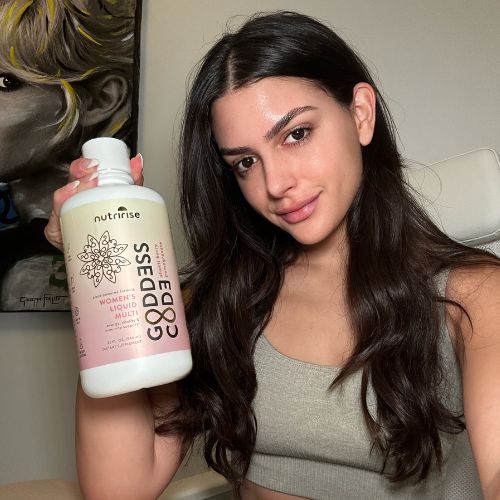
Goddess Code AURA+

Goddess Code AURA+

$39.95

Order Now
How Saffron Works: Crocin, Safranal and the Serotonin Story

How Saffron Works: Crocin, Safranal and the Serotonin Story

Quick answer

Saffron's mood story rests on three named compounds — crocin, converted in the body to crocetin, safranal, and picrocrocin — and on a set of proposed mechanisms that are, at this point, mostly preclinical: in animal and cell studies, saffron's constituents appear to influence serotonin signalling (including moderating serotonin reuptake), dampen oxidative stress and inflammation in brain tissue, and interact with stress-hormone pathways. The human trials show mood effects [SF01][SF02]; they do not show which mechanism produced them, because nobody has yet run the human study that isolates one. So the honest sentence is: saffron has credible human outcome data and plausible, unproven-in-humans mechanisms — the reverse of most supplements, which have beautiful mechanisms and no outcomes. One phrase you will never read from us: "nature's SSRI." SSRIs are specific drugs with known dosing, known effects and known risks; a flower extract with partially mapped pathways is not one, and pretending otherwise is how supplement marketing earns its reputation. As ever in this library: if low mood persists, impairs your life, or includes thoughts of harming yourself, the mechanism that matters is professional help — promptly (US: 988).

Key takeaways

  • The cast: crocin (pigment → crocetin after digestion), safranal (aroma), picrocrocin (bitter precursor of safranal). Standardized extracts declare amounts of this family (affron® standardizes to Lepticrosalides ≥3.5%); unstandardized labels — including ours [SF-L01] — do not, which is why mechanism talk can never rescue a vague label.
  • Serotonin: preclinical work suggests saffron constituents moderate serotonin reuptake and receptor activity — suggests, in animals and cells. This is also exactly why combining saffron with serotonergic medication is a clinician conversation.
  • Antioxidant/anti-inflammatory actions in brain tissue are the best-replicated laboratory findings — and the least specific: many things are antioxidants in a dish.
  • Stress-axis (HPA/cortisol) effects appear in animal models; human cortisol data for saffron is thin. The stress claims in this library lean on Kell's human symptom scores [SF02], not on hormone promises.
  • Mechanism quality check for any supplement: ask which tier the evidence sits on — human outcome, human biomarker, animal, or test tube — and refuse to let a lower tier borrow a higher tier's confidence.

Meet the compounds

A saffron stigma is a tiny chemical factory. Crocin is its headline pigment — a water-soluble carotenoid, rare in the plant world — and after you swallow it, digestive enzymes clip it into crocetin, the form that actually circulates and can cross into the brain. Safranal is the volatile oil behind saffron's unmistakable smell, formed from picrocrocin, the bitter glycoside that gives the spice its taste edge. When researchers standardize an extract, this family is what they standardize to: affron®, the extract in the healthy-adult trial [SF02], is standardized to Lepticrosalides — a measured bundle of crocins and safranal — at not less than 3.5%. Hold that against our own label: 88.5 mg of extract, no standardization declared [SF-L01]. The compounds are presumably in there — it is a genuine saffron extract — but "presumably" is doing real work in that sentence, and mechanism-based confidence scales with declared content. This is the practical reason standardization matters, stated without any salesmanship in either direction.

The serotonin chapter — labelled preclinical

The most repeated mechanism claim is that saffron "works on serotonin." Here is what that actually rests on. In animal studies, saffron extracts and isolated crocin/safranal produce antidepressant-like behaviour in standard rodent tests (forced swim, tail suspension), and those effects can be blocked or modified by drugs that interfere with serotonin signalling — evidence the pathway is involved, in rodents. Biochemical work suggests constituents may moderate serotonin reuptake and interact with specific serotonin receptor subtypes; crocetin's antioxidant action in neural tissue is documented in cell and animal models. What does not exist yet: a human trial demonstrating saffron changing serotonin measures in the brain, or a head-to-head mechanistic comparison with an SSRI in people. The trials article shows outcomes improved in humans [SF01][SF02]; the bridge from outcome to mechanism is still scaffolding, not road.

Two consequences follow, and this library takes both seriously. First, marketing language: "raises serotonin," "nature's Prozac," "works like an SSRI" — all banned here, permanently. Second, safety logic runs the other way: precisely because the serotonergic pathway is plausibly involved, stacking saffron onto prescribed serotonergic medication (SSRIs, SNRIs, MAOIs, triptans and friends) without the prescriber's knowledge is the one experiment nobody should run at home. Plausible mechanism, real caution; unproven mechanism, no claims. That asymmetry is what honest mechanism-writing looks like.

The other proposed pathways, ranked by evidence tier

Antioxidant and anti-inflammatory (laboratory-strong, human-unspecific). Crocin and crocetin scavenge free radicals and reduce inflammatory markers in cell and animal models, including in brain tissue under stress conditions. Replicated, real — and shared with half the produce aisle. It supports plausibility; it cannot carry a mood claim by itself.

Stress axis / HPA (animal-led). Rodent studies show saffron extracts blunting stress-hormone responses. In humans, the stress evidence we actually cite is symptomatic — Kell's volunteers reported lower stress and anxiety scores [SF02] — not hormonal. Our library therefore writes about felt stress for saffron and leaves cortisol numbers to contexts that measured them.

Sleep architecture (early human hints). Saffron trials in the depression literature sometimes recorded improved sleep scores as secondary outcomes, and dedicated sleep trials of standardized extracts exist in the wider literature — the evening article in this library reads those directly rather than borrowing mechanism talk. Sleep matters to mood mechanically (ask anyone), which is reason enough to keep it in its own article.

Neuroprotection/cognition (preclinical + early clinical elsewhere). Crocetin has been studied in cognitive contexts, including small trials in cognitive impairment — interesting, adjacent, and not what this cluster claims. AURA+ carries this library's daytime-focus shelf slot on its own label facts [SF-L06], not on borrowed saffron mechanisms.

Why this ordering — outcomes first, mechanisms second — is the whole point

Supplement marketing usually runs mechanism-first because mechanisms are unfalsifiable in a headline: everything "supports serotonin pathways" if you squint at a rodent. This library runs the other way. Saffron earned its cluster because randomized human trials — flawed, small, but real — found mood effects worth reporting [SF01][SF02]. The mechanisms above explain why scientists find those results plausible rather than magical. If the trials had failed, no quantity of crocin chemistry would justify a single article here; and because the trials are small, no quantity of chemistry upgrades them to proof. Keep that ordering in mind and you can read any supplement page on the internet — including ours — at the right strength.

Frequently asked questions

Is saffron basically a natural SSRI?

No. An SSRI is a defined molecule, at a defined dose, with human pharmacology measured directly. Saffron is a multi-compound extract whose serotonergic involvement is inferred from animal work. The resemblance is a hypothesis, and the difference matters most exactly where it could hurt — combining the two without medical supervision.

What is crocin, in one sentence?

The pigment that makes saffron red-gold, which your digestion converts to crocetin — the form that reaches the bloodstream and brain, and the compound behind much of the laboratory research.

Does the mechanism mean it works faster or slower?

Mechanisms don't set clocks; trials do. The human studies measured outcomes at four to eight weeks [SF01][SF02]. Expect that horizon, whatever the pathway diagrams suggest.

If standardization matters this much, why sell an unstandardized extract?

Because that's the product that exists, and our job in this library is to label-read it as honestly as anyone's [SF-L01] — declaring the gap rather than papering over it. The dose article in this library's practical group sets out exactly how we'd evaluate any saffron label, ours first.

Can I take saffron with my other supplements?

Combinations within this library's shelf (magnesium, vitamin D, ashwagandha) raise no mechanism flags we know of — but medication, not supplements, is where the real interactions live. Prescription serotonergic drugs, blood-pressure medication and anticoagulants all earn a clinician or pharmacist check before saffron joins the routine.

Next step

Back to the pillar guide for the full map — or forward to the trials, read closely, in Saffron for Mood: What the Trials Actually Found. The real-life group follows: the line between low mood and depression, stress and the overthinking mind, and saffron's evening side.

References

[SF01] Hausenblas HA et al. — Saffron (Crocus sativus L.) and major depressive disorder: a meta-analysis of randomized clinical trials (Journal of Integrative Medicine, 2013; PMID 24299602): https://pubmed.ncbi.nlm.nih.gov/24299602/

[SF02] Kell G et al. — affron®, a novel saffron extract, improves mood in healthy adults over 4 weeks: a double-blind, parallel, randomized, placebo-controlled clinical trial (Complementary Therapies in Medicine, 2017; PMID 28735826): affron is a standardized stigma extract (Lepticrosalides); 28 mg/day effective, 22 mg/day not: https://pubmed.ncbi.nlm.nih.gov/28735826/

• Recommended Products:

.

NutriRise Saffron Supplement

NutriRise Saffron Supplement

$19.95

Order Now
NutriRise Ashwagandha Root 1300 MG

NutriRise Ashwagandha Root 1300 MG

$21.95

Order Now
NutriRise Ashwagandha Root 60C

NutriRise Ashwagandha Root 60C

$19.95

Order Now
NutriRise Magnesium Biglycinate

NutriRise Magnesium Biglycinate

$24.95

Order Now
NutriRise D3 Softgels

NutriRise D3 Softgels

$19.90

Order Now
NutriRise Bedtime Bliss Sleep Strips

NutriRise Bedtime Bliss Sleep Strips

$36.50

Order Now
Goddess Code AURA+

Goddess Code AURA+

$39.95

Order Now
Basim Mirza
Basim Mirza
Co-founder, NutriRise · BJJ Gold Medalist
Co-founder of NutriRise and BJJ gold medalist. Basim writes about t...
Learn More
How Saffron Works: Crocin, Safranal and the Serotonin Story

Quick answer

Saffron's mood story rests on three named compounds — crocin, converted in the body to crocetin, safranal, and picrocrocin — and on a set of proposed mechanisms that are, at this point, mostly preclinical: in animal and cell studies, saffron's constituents appear to influence serotonin signalling (including moderating serotonin reuptake), dampen oxidative stress and inflammation in brain tissue, and interact with stress-hormone pathways. The human trials show mood effects [SF01][SF02]; they do not show which mechanism produced them, because nobody has yet run the human study that isolates one. So the honest sentence is: saffron has credible human outcome data and plausible, unproven-in-humans mechanisms — the reverse of most supplements, which have beautiful mechanisms and no outcomes. One phrase you will never read from us: "nature's SSRI." SSRIs are specific drugs with known dosing, known effects and known risks; a flower extract with partially mapped pathways is not one, and pretending otherwise is how supplement marketing earns its reputation. As ever in this library: if low mood persists, impairs your life, or includes thoughts of harming yourself, the mechanism that matters is professional help — promptly (US: 988).

Key takeaways

  • The cast: crocin (pigment → crocetin after digestion), safranal (aroma), picrocrocin (bitter precursor of safranal). Standardized extracts declare amounts of this family (affron® standardizes to Lepticrosalides ≥3.5%); unstandardized labels — including ours [SF-L01] — do not, which is why mechanism talk can never rescue a vague label.
  • Serotonin: preclinical work suggests saffron constituents moderate serotonin reuptake and receptor activity — suggests, in animals and cells. This is also exactly why combining saffron with serotonergic medication is a clinician conversation.
  • Antioxidant/anti-inflammatory actions in brain tissue are the best-replicated laboratory findings — and the least specific: many things are antioxidants in a dish.
  • Stress-axis (HPA/cortisol) effects appear in animal models; human cortisol data for saffron is thin. The stress claims in this library lean on Kell's human symptom scores [SF02], not on hormone promises.
  • Mechanism quality check for any supplement: ask which tier the evidence sits on — human outcome, human biomarker, animal, or test tube — and refuse to let a lower tier borrow a higher tier's confidence.

Meet the compounds

A saffron stigma is a tiny chemical factory. Crocin is its headline pigment — a water-soluble carotenoid, rare in the plant world — and after you swallow it, digestive enzymes clip it into crocetin, the form that actually circulates and can cross into the brain. Safranal is the volatile oil behind saffron's unmistakable smell, formed from picrocrocin, the bitter glycoside that gives the spice its taste edge. When researchers standardize an extract, this family is what they standardize to: affron®, the extract in the healthy-adult trial [SF02], is standardized to Lepticrosalides — a measured bundle of crocins and safranal — at not less than 3.5%. Hold that against our own label: 88.5 mg of extract, no standardization declared [SF-L01]. The compounds are presumably in there — it is a genuine saffron extract — but "presumably" is doing real work in that sentence, and mechanism-based confidence scales with declared content. This is the practical reason standardization matters, stated without any salesmanship in either direction.

The serotonin chapter — labelled preclinical

The most repeated mechanism claim is that saffron "works on serotonin." Here is what that actually rests on. In animal studies, saffron extracts and isolated crocin/safranal produce antidepressant-like behaviour in standard rodent tests (forced swim, tail suspension), and those effects can be blocked or modified by drugs that interfere with serotonin signalling — evidence the pathway is involved, in rodents. Biochemical work suggests constituents may moderate serotonin reuptake and interact with specific serotonin receptor subtypes; crocetin's antioxidant action in neural tissue is documented in cell and animal models. What does not exist yet: a human trial demonstrating saffron changing serotonin measures in the brain, or a head-to-head mechanistic comparison with an SSRI in people. The trials article shows outcomes improved in humans [SF01][SF02]; the bridge from outcome to mechanism is still scaffolding, not road.

Two consequences follow, and this library takes both seriously. First, marketing language: "raises serotonin," "nature's Prozac," "works like an SSRI" — all banned here, permanently. Second, safety logic runs the other way: precisely because the serotonergic pathway is plausibly involved, stacking saffron onto prescribed serotonergic medication (SSRIs, SNRIs, MAOIs, triptans and friends) without the prescriber's knowledge is the one experiment nobody should run at home. Plausible mechanism, real caution; unproven mechanism, no claims. That asymmetry is what honest mechanism-writing looks like.

The other proposed pathways, ranked by evidence tier

Antioxidant and anti-inflammatory (laboratory-strong, human-unspecific). Crocin and crocetin scavenge free radicals and reduce inflammatory markers in cell and animal models, including in brain tissue under stress conditions. Replicated, real — and shared with half the produce aisle. It supports plausibility; it cannot carry a mood claim by itself.

Stress axis / HPA (animal-led). Rodent studies show saffron extracts blunting stress-hormone responses. In humans, the stress evidence we actually cite is symptomatic — Kell's volunteers reported lower stress and anxiety scores [SF02] — not hormonal. Our library therefore writes about felt stress for saffron and leaves cortisol numbers to contexts that measured them.

Sleep architecture (early human hints). Saffron trials in the depression literature sometimes recorded improved sleep scores as secondary outcomes, and dedicated sleep trials of standardized extracts exist in the wider literature — the evening article in this library reads those directly rather than borrowing mechanism talk. Sleep matters to mood mechanically (ask anyone), which is reason enough to keep it in its own article.

Neuroprotection/cognition (preclinical + early clinical elsewhere). Crocetin has been studied in cognitive contexts, including small trials in cognitive impairment — interesting, adjacent, and not what this cluster claims. AURA+ carries this library's daytime-focus shelf slot on its own label facts [SF-L06], not on borrowed saffron mechanisms.

Why this ordering — outcomes first, mechanisms second — is the whole point

Supplement marketing usually runs mechanism-first because mechanisms are unfalsifiable in a headline: everything "supports serotonin pathways" if you squint at a rodent. This library runs the other way. Saffron earned its cluster because randomized human trials — flawed, small, but real — found mood effects worth reporting [SF01][SF02]. The mechanisms above explain why scientists find those results plausible rather than magical. If the trials had failed, no quantity of crocin chemistry would justify a single article here; and because the trials are small, no quantity of chemistry upgrades them to proof. Keep that ordering in mind and you can read any supplement page on the internet — including ours — at the right strength.

Frequently asked questions

Is saffron basically a natural SSRI?

No. An SSRI is a defined molecule, at a defined dose, with human pharmacology measured directly. Saffron is a multi-compound extract whose serotonergic involvement is inferred from animal work. The resemblance is a hypothesis, and the difference matters most exactly where it could hurt — combining the two without medical supervision.

What is crocin, in one sentence?

The pigment that makes saffron red-gold, which your digestion converts to crocetin — the form that reaches the bloodstream and brain, and the compound behind much of the laboratory research.

Does the mechanism mean it works faster or slower?

Mechanisms don't set clocks; trials do. The human studies measured outcomes at four to eight weeks [SF01][SF02]. Expect that horizon, whatever the pathway diagrams suggest.

If standardization matters this much, why sell an unstandardized extract?

Because that's the product that exists, and our job in this library is to label-read it as honestly as anyone's [SF-L01] — declaring the gap rather than papering over it. The dose article in this library's practical group sets out exactly how we'd evaluate any saffron label, ours first.

Can I take saffron with my other supplements?

Combinations within this library's shelf (magnesium, vitamin D, ashwagandha) raise no mechanism flags we know of — but medication, not supplements, is where the real interactions live. Prescription serotonergic drugs, blood-pressure medication and anticoagulants all earn a clinician or pharmacist check before saffron joins the routine.

Next step

Back to the pillar guide for the full map — or forward to the trials, read closely, in Saffron for Mood: What the Trials Actually Found. The real-life group follows: the line between low mood and depression, stress and the overthinking mind, and saffron's evening side.

References

[SF01] Hausenblas HA et al. — Saffron (Crocus sativus L.) and major depressive disorder: a meta-analysis of randomized clinical trials (Journal of Integrative Medicine, 2013; PMID 24299602): https://pubmed.ncbi.nlm.nih.gov/24299602/

[SF02] Kell G et al. — affron®, a novel saffron extract, improves mood in healthy adults over 4 weeks: a double-blind, parallel, randomized, placebo-controlled clinical trial (Complementary Therapies in Medicine, 2017; PMID 28735826): affron is a standardized stigma extract (Lepticrosalides); 28 mg/day effective, 22 mg/day not: https://pubmed.ncbi.nlm.nih.gov/28735826/

• Recommended Products:

.

NutriRise Saffron Supplement

NutriRise Saffron Supplement

$19.95

Order Now
NutriRise Ashwagandha Root 1300 MG

NutriRise Ashwagandha Root 1300 MG

$21.95

Order Now
NutriRise Ashwagandha Root 60C

NutriRise Ashwagandha Root 60C

$19.95

Order Now
NutriRise Magnesium Biglycinate

NutriRise Magnesium Biglycinate

$24.95

Order Now
NutriRise D3 Softgels

NutriRise D3 Softgels

$19.90

Order Now
NutriRise Bedtime Bliss Sleep Strips

NutriRise Bedtime Bliss Sleep Strips

$36.50

Order Now
Goddess Code AURA+

Goddess Code AURA+

$39.95

Order Now
Cart (0)
Your Cart Is Empty!
Start With Our Best Sellers
NutriRise Ashwagandha Root 1300 MG | Organic Black Pepper Extract | 120 Capsules
$21.95
NutriRise 15-Day Rapid Cleanse | 9 Natural Ingredients with Aloe Vera & Senna | Plus Probiotics
$15.45
NutriRise Glucosamine Chondroitin MSM | 8 Ingredient Joint Support Blend | 90 Capsules
$29.95
Thanks for contacting us! We'll get back to you shortly. Thanks for subscribing Thanks! We will notify you when it becomes available! Product is out of stock. There is only one item left to add to the cart There are only [num_items] items left to add to the cart