


Quick answer
A woman's hydration needs are not one number for life — they shift with her cycle, rise in pregnancy and breastfeeding, and change character again at menopause. The reference points: total water (drinks plus food) runs about 2.7 litres a day for adult women, 3.0 litres in pregnancy and 3.8 litres while breastfeeding [D01], with ACOG framing pregnancy intake as 8–12 cups of water a day [D02]. What does not change across any stage: thirst plus pale-yellow urine is a reliable everyday gauge, food supplies most electrolytes, and the habits that work at 25 still work at 55 — only the emphasis moves. This guide walks the stages; pregnancy and breastfeeding get their own deeper article in this library.
Key takeaways
- The baseline for adult women is 2.7 L of total water a day [D01] — roughly 2.2 L from drinks, the rest from food.
- The menstrual cycle moves fluid around (bloating before a period is the body holding water, not lacking it); needs do not swing wildly, and no stage of the cycle calls for forcing fluids.
- Pregnancy and breastfeeding are the two stages where the target genuinely rises [D01][D02] — covered in depth in our pregnancy and breastfeeding guide.
- Menopause changes the experience of hydration: hot flashes and night sweats are real sweat losses, sleep runs hotter, and the fix is the same routine, applied with a bit more intention.
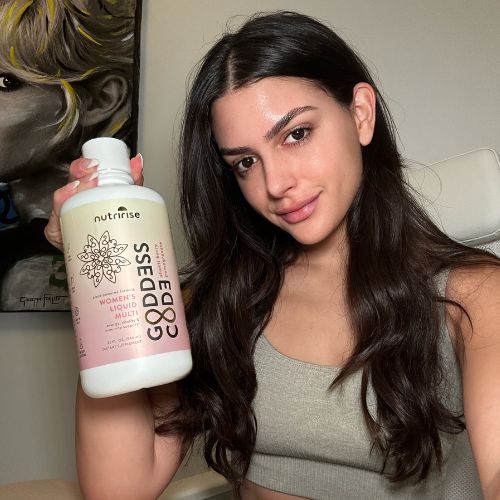
- Goddess Code Green Tara Matcha Hydration is this library's women's daily drink — 100 mg sodium, 200 mg potassium, 20 mg magnesium per scoop, caffeine-free [L06] — a flavour-led daily ritual, honestly framed. (Its own label, like ours for every formula, directs women who are pregnant, nursing or on medication to check with a healthcare professional first.)
The cycle: fluid moves, needs barely do
Across the menstrual cycle, hormonal shifts change how much water the body holds onto — most women know the premenstrual pattern of bloating and a kilo that arrives and leaves on schedule. That is redistribution and retention, not dehydration, and it does not call for either flooding or restricting fluids. Practical translation: keep the routine steady, expect the scale and the rings-on-fingers test to wobble, and judge hydration by the standing gauges — thirst, urine colour, how you feel by afternoon. Heavy periods deserve one cross-reference: they are an iron story as much as a fluid one, and our sister library covers it in Iron Needs for Women: Periods, Pregnancy and Life Stages.
Pregnancy and postpartum: the stages where the target moves
Pregnancy raises the reference intake to 3.0 L of total water a day [D01] — ACOG's patient guidance puts it at 8–12 cups of water daily, sipped through the day rather than saved for thirst [D02]. Blood volume expands, amniotic fluid turns over, and nausea can quietly cut intake at exactly the wrong time. Breastfeeding raises it further, to 3.8 L [D01] — milk is mostly water, and the classic advice holds: drink to thirst, keep a glass beside the nursing chair. Both stages carry their own signs-that-matter and call-your-provider lines, which is why they have a dedicated article: Hydration in Pregnancy and Breastfeeding. One rule governs both stages and outranks everything in this library: supplements — electrolyte drinks included — are a conversation with your own provider first. The labels say so, and so do we.
The postpartum weeks: recovery runs on fluids too
Between pregnancy and the breastfeeding months sits the fourth trimester — surgical or vaginal recovery, broken nights, and a body returning blood volume and fluid balance toward baseline while you are too busy to notice your own signals. The practical risks are mundane: hours passing without a drink because the baby is finally asleep on you, headaches written off as tiredness, constipation aggravated by low intake at exactly the time it needs no help. The fixes are the same structural kind as the nursing-chair glass: a bottle filled the night before and placed where the night feeds happen, drinking whenever the baby drinks, and treating the afternoon headache as a fluid question before it becomes anything else. Anything beyond the mundane — dizziness that persists, very scant urine, a racing heart — belongs to your provider, using the same call list as pregnancy, which our pregnancy and breastfeeding guide sets out in full.
Perimenopause: the transition years
The years before menopause proper deserve their own paragraph because they combine both worlds: cycles still arriving but irregularly, the first hot flashes and night sweats appearing alongside the familiar premenstrual fluid wobble, and sleep beginning to fragment. Nothing about the intake reference changes — it remains the adult 2.7 L [D01] — but the variance of daily losses rises: one night is ordinary, the next is sweat-soaked. Women in this stage often do best with the flexible version of the routine — bedside water as a standing fixture, a deliberate morning replacement after a sweaty night, and the self-check from our everyday guide run at the afternoon slump, when a broken night and a dry day compound each other.
Menopause: same system, hotter nights
Menopause does not rewrite the intake table — the 2.7 L reference stands [D01] — but it changes the lived experience in ways women describe consistently: hot flashes that arrive as sudden sweating, night sweats that soak sleep, and a sense that the body's thermostat has become less predictable. Each flash is a small sweat event; a night of them is a real, if modest, fluid loss, and broken sleep compounds the next day's fatigue in ways that look exactly like under-drinking. The response is unglamorous and effective: keep the daily routine, keep water at the bedside, replace a genuinely sweaty night with a morning glass plus breakfast, and let a daily electrolyte drink earn its place on taste — a cold Green Tara at the afternoon slump [L06] is a ritual that makes the routine stick. What we will not do is promise that hydration fixes flashes, sleep or skin: it supports the system; it is not a treatment, and symptoms that disrupt life belong in a clinician conversation.
The through-line: habits that survive every stage
- Anchor the morning. A glass of water with breakfast works at every age and stage.
- Keep the gauges, not the quotas. Thirst and urine colour adapt to your stage automatically; fixed litre targets do not.
- Food is the electrolyte base. Potassium from produce and dairy [W01], magnesium from nuts, grains and greens [W02] — drinks top up, meals provide.
- One tasty drink a day. The routine survives because part of it is enjoyable — that is the honest job of the daily formulas on this shelf [L06][L08].
- Stage changes are provider conversations. New medications, kidney or blood-pressure issues, pregnancy — each moves hydration from general guidance to personal advice.
Frequently asked questions
Do I need more water at certain points in my cycle?
Not meaningfully. The cycle redistributes fluid — premenstrual bloating is retention, not shortage. Keep intake steady and let thirst arbitrate; forcing extra water in the bloated week helps nothing.
How much more should I drink when pregnant or breastfeeding?
The reference points rise from 2.7 L to 3.0 L (pregnancy) and 3.8 L (breastfeeding) of total water a day [D01]; ACOG frames pregnancy as 8–12 cups of water daily [D02]. Our dedicated pregnancy and breastfeeding guide covers the signs and the call-your-provider list.
Will drinking more water help with menopause symptoms or skin?
It will help you not be also dehydrated — a genuinely common amplifier of fatigue and headaches — but hydration is not a treatment for hot flashes, sleep disruption or skin changes, and we make no such promise. Persistent symptoms deserve a clinician.
Is a daily electrolyte drink appropriate for women?
For generally healthy women, a light daily formula — Green Tara provides 100 mg sodium and 200 mg potassium per scoop [L06] — is a modest top-up within a normal diet. The exceptions matter more than the rule: pregnancy, nursing, kidney issues and blood-pressure medication all move this to a provider conversation first [W01].
I retain water before my period — should I drink less?
No — restricting fluids does not relieve hormonally driven retention and risks actual under-drinking. Steady intake, normal salt awareness, and a few days of patience are the honest answer.
Next step
Start with the everyday hydration guide for the full daily system — and if you are pregnant or nursing, read the pregnancy and breastfeeding guide next; it is the most safety-conscious article in this library.
References
[D01] Institute of Medicine — Dietary Reference Intakes for Water, Potassium, Sodium, Chloride, and Sulfate (National Academies Press, 2005): total water AI — women 2.7 L/day, pregnancy 3.0 L/day, lactation 3.8 L/day, from beverages and food combined: https://nap.nationalacademies.org/read/10925
[D02] American College of Obstetricians and Gynecologists — Nutrition During Pregnancy (patient FAQ): aim for 8 to 12 cups of water a day during pregnancy; drink throughout the day, not only when thirsty: https://www.acog.org/womens-health/faqs/nutrition-during-pregnancy
[W01] NIH Office of Dietary Supplements — Potassium Fact Sheet for Health Professionals: AI 2,600 mg women / 3,400 mg men, food-first; individual guidance where excretion is impaired (kidney disease, medications): https://ods.od.nih.gov/factsheets/Potassium-HealthProfessional/
[W02] NIH Office of Dietary Supplements — Magnesium Fact Sheet for Health Professionals: RDAs 310–320 mg women / 400–420 mg men; food sources include nuts, whole grains and greens: https://ods.od.nih.gov/factsheets/Magnesium-HealthProfessional/
[L06] Goddess Code Green Tara Matcha Hydration — Supplement Facts label (verified 2026-11-05): per 1 scoop (5.4 g): sodium 100 mg, potassium 200 mg, magnesium 20 mg, calcium 40 mg, B-complex 33% DV; caffeine-free; label directs pregnant/nursing women and those on medication to consult a healthcare professional before use: https://nutririse.com/products/goddess-code-green-tara-matcha-hydration-electrolyte-vitamin-powder-caffeine-free-daily-wellness-drink-post-workout-for-women
[L08] AdaptoZen Harmony Hydration — Supplement Facts label (verified 2026-11-05): per 1 scoop (5.4 g): sodium 100 mg, potassium 200 mg, magnesium 20 mg, calcium 40 mg; caffeine-free: https://nutririse.com/products/adaptozen-harmony-hydration-golden-passion-caffeine-free-electrolytes-b-vitamins-for-all-day-wellness
• Recommended Products:
.








 Cart (


